
Ask any first-time glass bottle buyer what caught them off guard, and mold costs come up every time. Unlike buying off-the-shelf packaging, having glass bottles made means dealing with molds — metal forms that shape each bottle. And the way mold costs work can add thousands to your first order, or nothing at all, depending on one critical question: does the factory already have a mold for your bottle?
This guide covers how mold pricing actually works, when you can avoid paying for one, and what to watch out for in the contract. If you're also planning your first order from a Chinese factory, see our guide to sourcing from China for the full picture on MOQ, payment terms, and lead times.
What Exactly Is a Glass Bottle Mold?
A glass bottle mold is a split metal form — usually cast iron or bronze — that gives molten glass its final shape. The two halves clamp shut around a gob of molten glass, compressed air blows the glass into the cavity, and the mold opens to release the bottle.
Cast iron molds last roughly 300,000 to 500,000 cycles before they need refurbishing. That sounds like a lot, but a production line running 24/7 goes through cycles fast. When a mold wears out, the surface degrades — you start seeing seam lines, uneven walls, or stuck bottles.
The Big Split: Shared Molds vs. Custom Molds
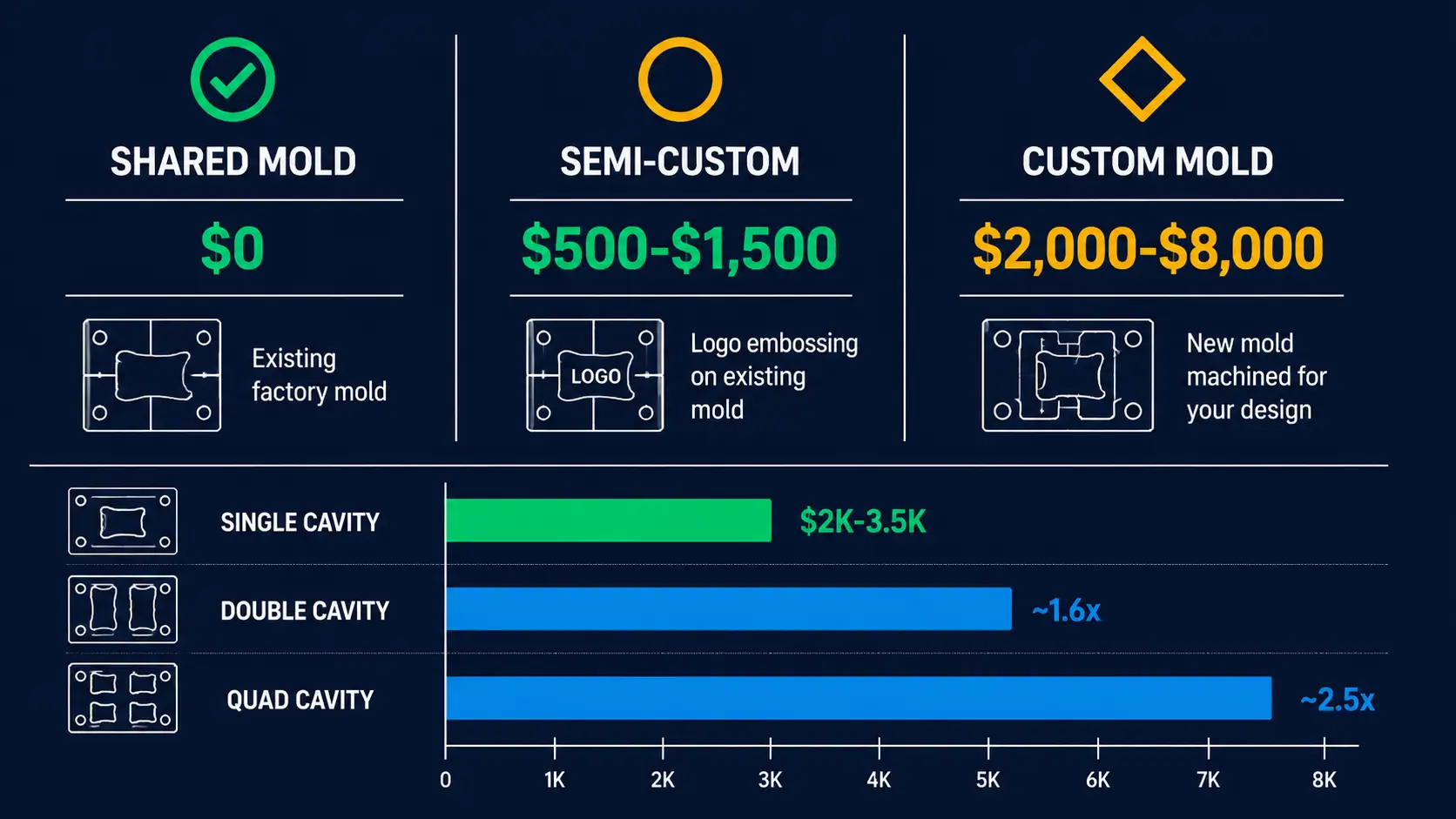
This is where most of the cost variance lives. If a factory already carries a mold for the exact bottle you want, you pay zero mold fee. If they need to cut a new one from scratch, you're looking at $2,000–$8,000.
Shared mold (no mold fee). The factory has molds left over from previous orders — typically for standard shapes like Boston Rounds, Woozy bottles, Bordeaux wine bottles, and generic jars. You pay only for glass and production. Shared molds are why you'll see identical bottles from different brands: everyone is using the same mold.
Custom mold ($2,000–$8,000). Machined specifically for your design. The price depends on three things: how complex the bottle shape is (embossing, non-round profiles, decorative features), the mold material, and the cavity count. A simple custom Boston Round with your logo embossed runs on the low end. An irregular luxury spirits bottle with deep embossing hits the high end.
Semi-custom ($500–$1,500). A middle path: the factory takes an existing mold and modifies it — embossing your logo, changing the heel profile, or adjusting the neck slightly. You don't get a fully unique shape, but you get visible branding without the full custom price tag. You can browse standard bottle profiles in the bottle database to see which shapes already have shared molds available.
Cavity Count: Speed vs. Upfront Cost
Molds can hold one bottle shape (single cavity) or multiple identical shapes side by side (multi-cavity). More cavities cost more upfront but run faster:
- Single cavity: Cheapest mold, slowest output — roughly 12–20 bottles per minute.
- Double cavity: About 1.6× the mold cost, but 2× the production speed.
- Quad cavity: About 2.5× the mold cost, 4× the speed.
If you're ordering 50,000 bottles once and never again, single cavity is fine. But if you're planning annual runs above 500,000 units, the math shifts — the higher mold cost gets amortized across so many bottles that the per-unit savings from faster production more than pay for it.
Ask your supplier to quote both single and multi-cavity options with the per-unit production cost broken out. The difference can be surprising.
Mold Ownership: Get It in Writing
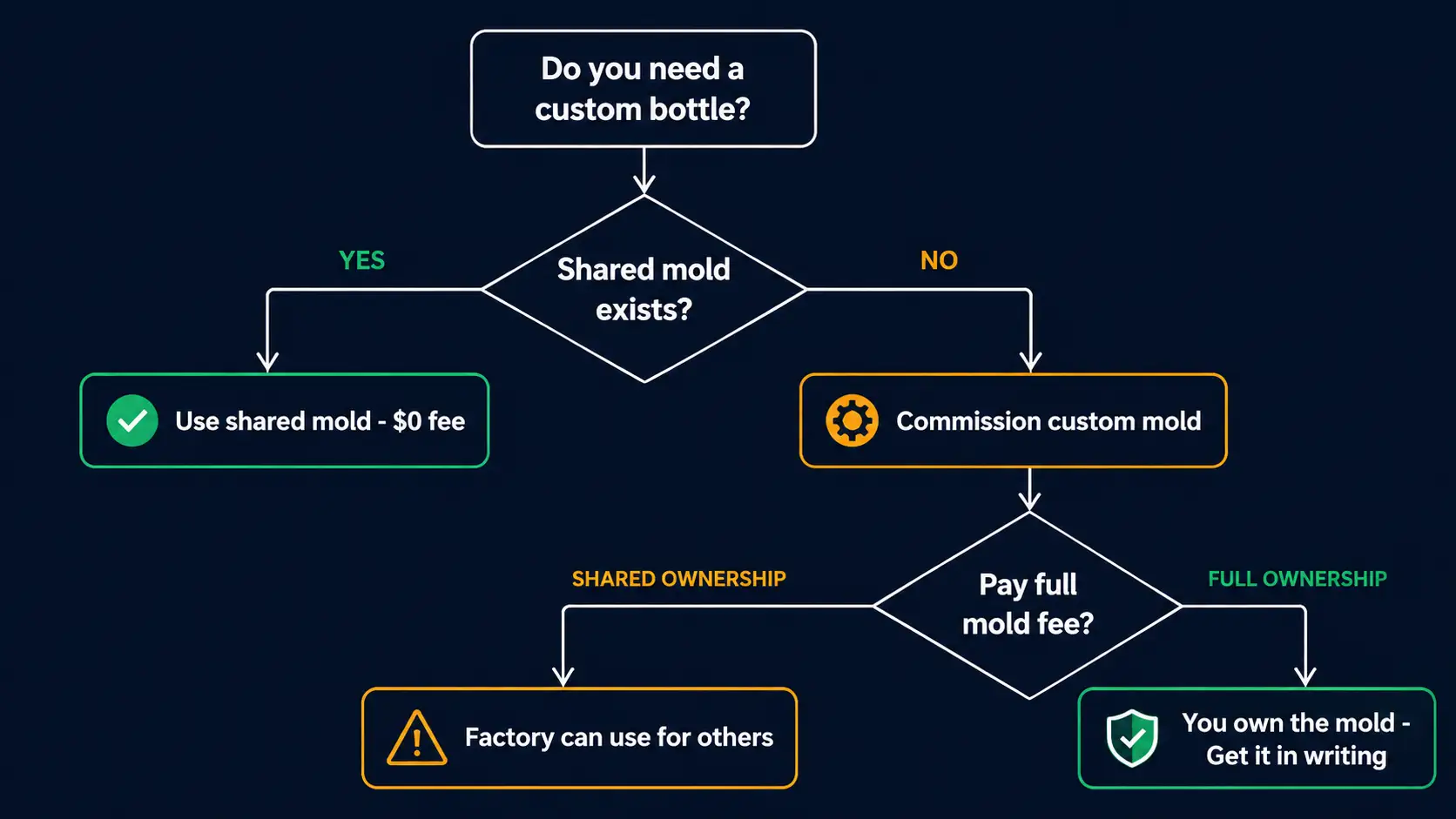
This is the part people skip and regret later. If you paid for a custom mold, it's yours. But without explicit contract terms, some factories will argue otherwise. Here's what can go wrong:
- The factory claims the mold as their property after your order completes.
- They use your mold to produce bottles for other buyers — possibly your competitors.
- They charge a monthly "storage fee" ($50–200/month) to hold your mold, effectively holding it hostage.
Put this in your purchase contract:
- You own the mold and have the right to retrieve it at any time.
- The factory cannot use the mold for any other customer without your written permission.
- Mold storage for 12 months after your last order is included at no charge.
Some factories will offer to split the mold cost in exchange for shared ownership — they get to use the mold for other customers. This can work to your advantage if the shared mold brings your cost down significantly, but only if you're comfortable with other brands having access to the same bottle shape.
Typical Mold Costs by Bottle Type
These ranges are per cavity, based on current pricing from Chinese glass factories:
- Standard round bottles (Boston Round, Bordeaux): $2,000–$3,500
- Woozy / hot sauce bottles: $2,500–$4,000 — shared molds are very common here, so always ask first
- Dropper bottles: $2,000–$4,000
- Mason jars: $3,000–$5,000
- Complex shapes (non-round, deep embossing): $3,500–$6,000
- Custom luxury bottles (irregular shapes, heavy embossing, decorative): $5,000–$12,000+
Before You Commit
A few practical notes from buyers who've been through this:
- Always ask if a shared mold exists before paying for a custom one. You'd be surprised how many "custom" designs are actually close enough to an existing mold that semi-custom works.
- Mold lead time is 25–45 days. Build this into your production timeline from the start — it's often the longest single lead time in the entire order.
- Molds are a one-time cost. If a factory quotes you a recurring "mold maintenance fee," push back. Normal wear is their problem during production; you pay once.
- If you're ordering multiple bottle sizes, each size needs its own mold. Budget accordingly.
If you're comparing quotes from different suppliers and trying to figure out whether a mold fee is fair, run your specs through a bottle database to check standard pricing ranges. The data helps in negotiations. Once you've settled on a bottle design, our container loading calculator can help you estimate how many units fit per shipment — a number you'll want before signing any purchase order.